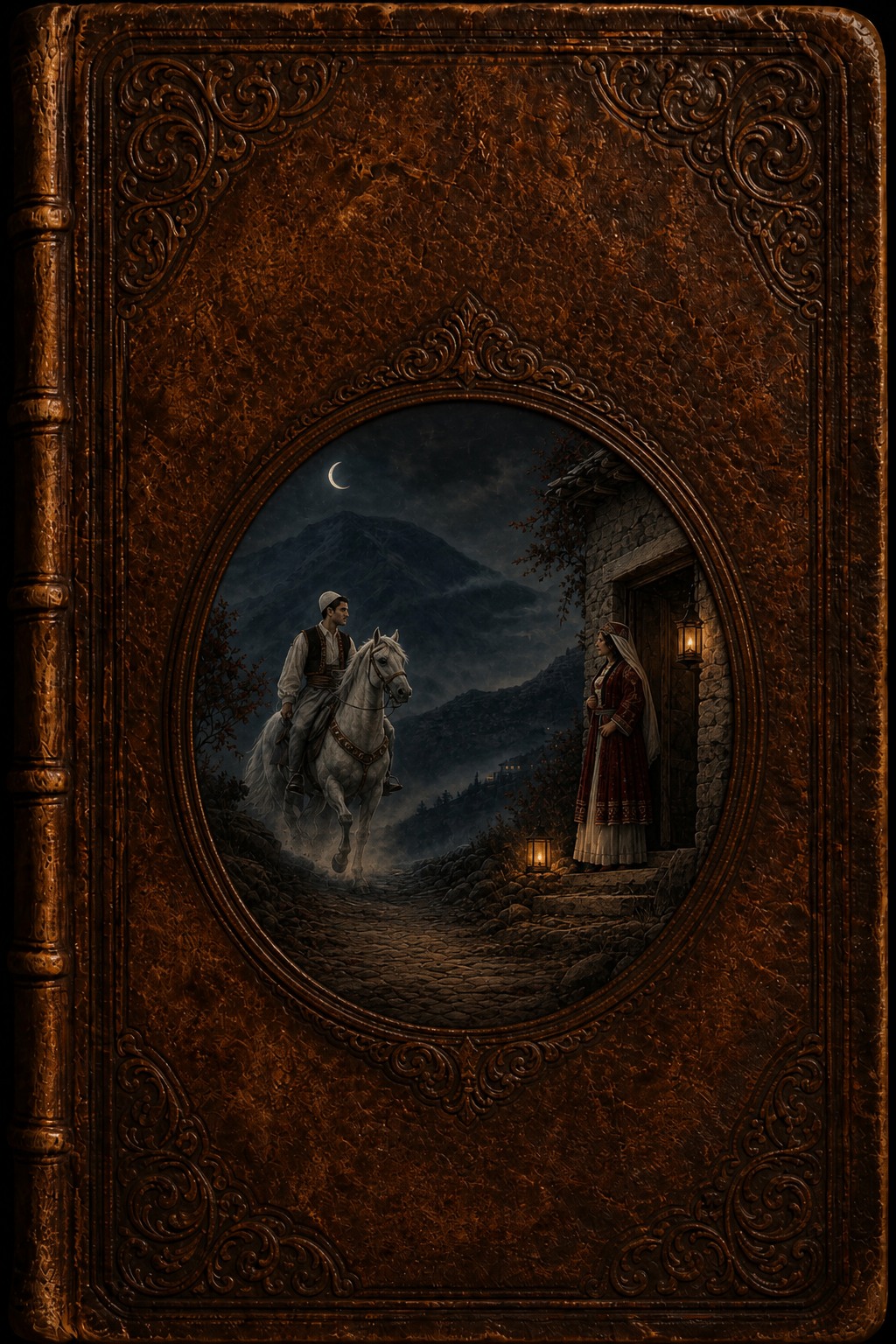
Ballad
Ballad of Constantine and Dhoqina
Drag a corner — open the book
Before the telling
The popular legend of little Constantine who rises from the grave to bring his sister Dhoqina back to their dying mother, in fulfilment of his pledge, is one of the best-known of Albanian folklore, involving the so-called Lenore motif. In Albania, the sister is known either as Dhoqina or Doruntina, and in the Italo-Albanian version of the legend, she appears as Garantina or Fjoruntina. Her dead brother, Constantine, is also known in northern Albania under the name Halil Garria, and by the Muslims of central Albania on occasion as Ali or Hysen i vogël. The Lenore motif, named after the poem ‘Lenore’ (1773) by German poet Gottfried August Bürger (1747-1794), is recorded in Byzantine and Modern Greek literature, and in Serbian (‘Jelica and her brothers’), Bulgarian and Lithuanian folklore, to mention but a few.
Before the telling
The ballad is known wherever Albanian is spoken, not only in Albania itself and southern Italy, but also in Kosova, Montenegro and Macedonia. It was adapted by writer Ismail Kadare (b. 1936) in his successful novel ‘Kush e solli Doruntinën?’ (Who brought Doruntine back? 1979), translated into English as ‘Doruntine’ (New York 1988). "Constantine and Doruntina" by Ismail Lulani, 1987
Robert Elsie — editorial note
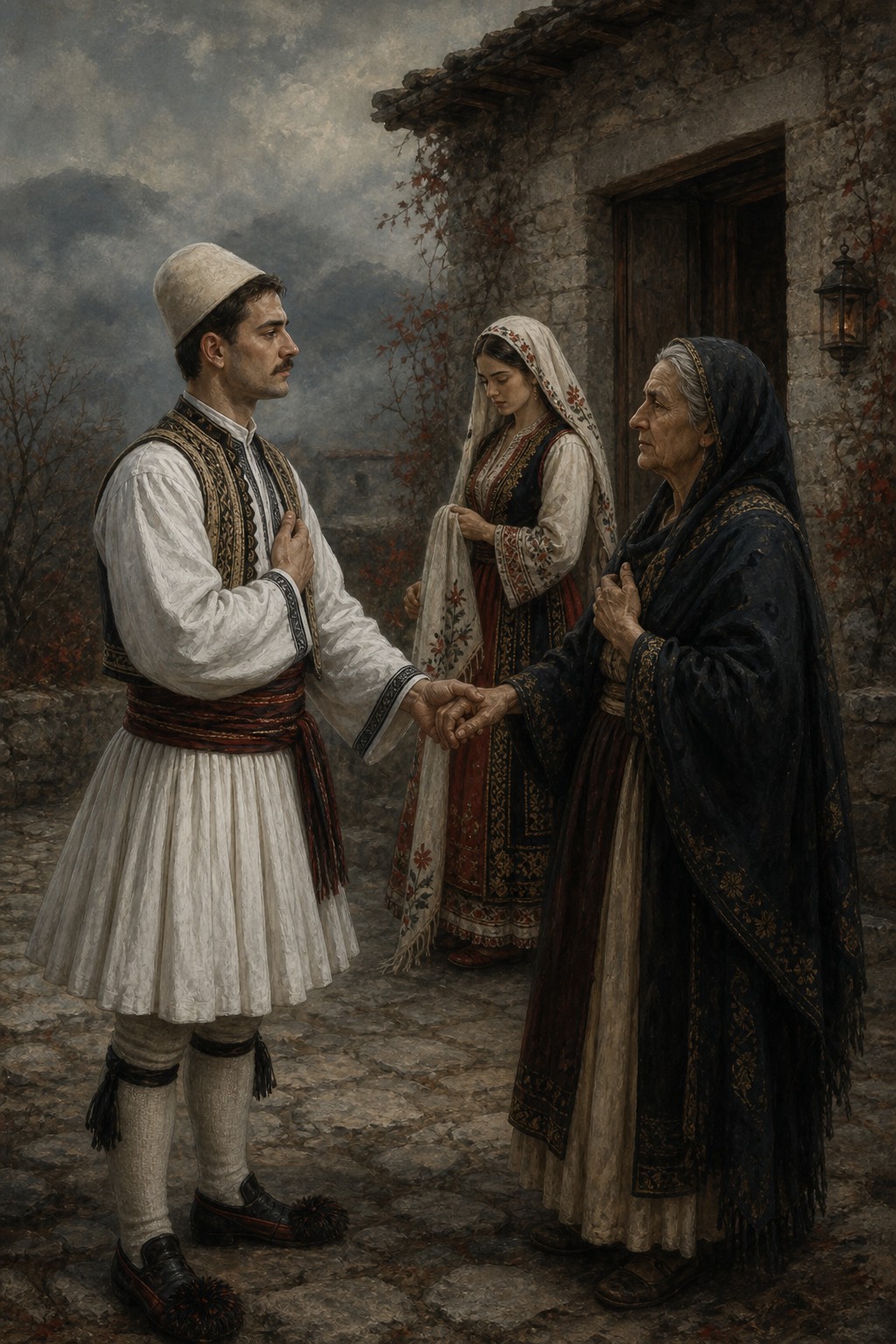
Word of honour
Long ago there was a mother
Who had nine sons and a daughter.
All the lads were dashing heroes
And the maid was called Dhoqina,
Just a young girl, still unmarried,
Agile was she like a goshawk.
From afar did come a missive
Asking for her hand in marriage,
But the brothers would not let her,
Only would the youngest of them,
Only Constantine accepted,
Days went by and months receded,
Then she went abroad to marry
Seven days she journeyed thither.
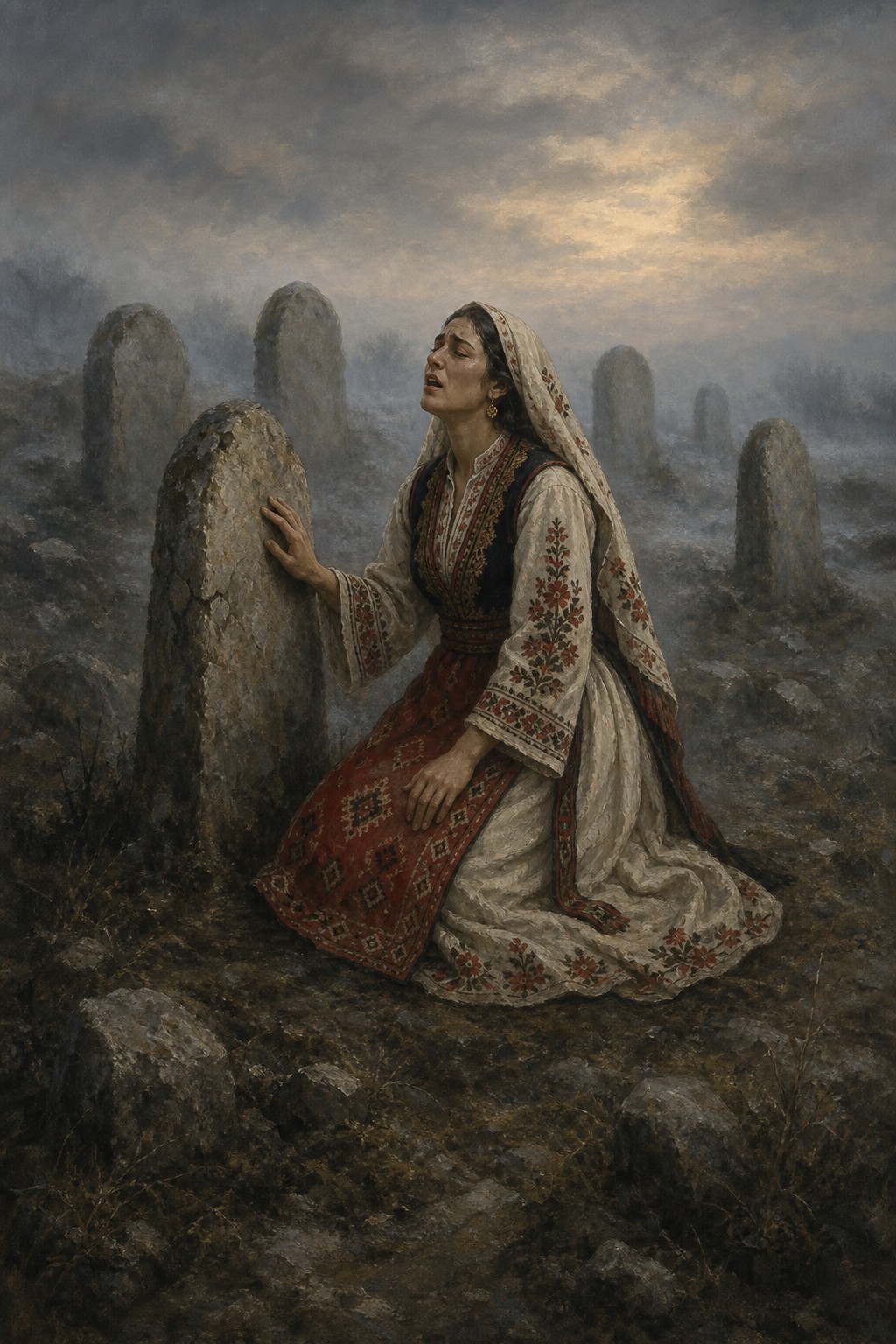
Mother at the grave
All the brothers then departed,
Travelled far to serve as soldiers
Fighting in a war with Russia,
All nine brothers fell in battle.
Left was but the widowed mother:
“Constantine, my son, where are you?
While alive, you made a promise,
This was what you said on parting:
‘Be I dead or be I living
I’ll return to you Dhoqina!’
Constantine, my son, where are you?
What now of your word of honour?”
Thus complained the widowed mother,
Longing for her distant daughter.
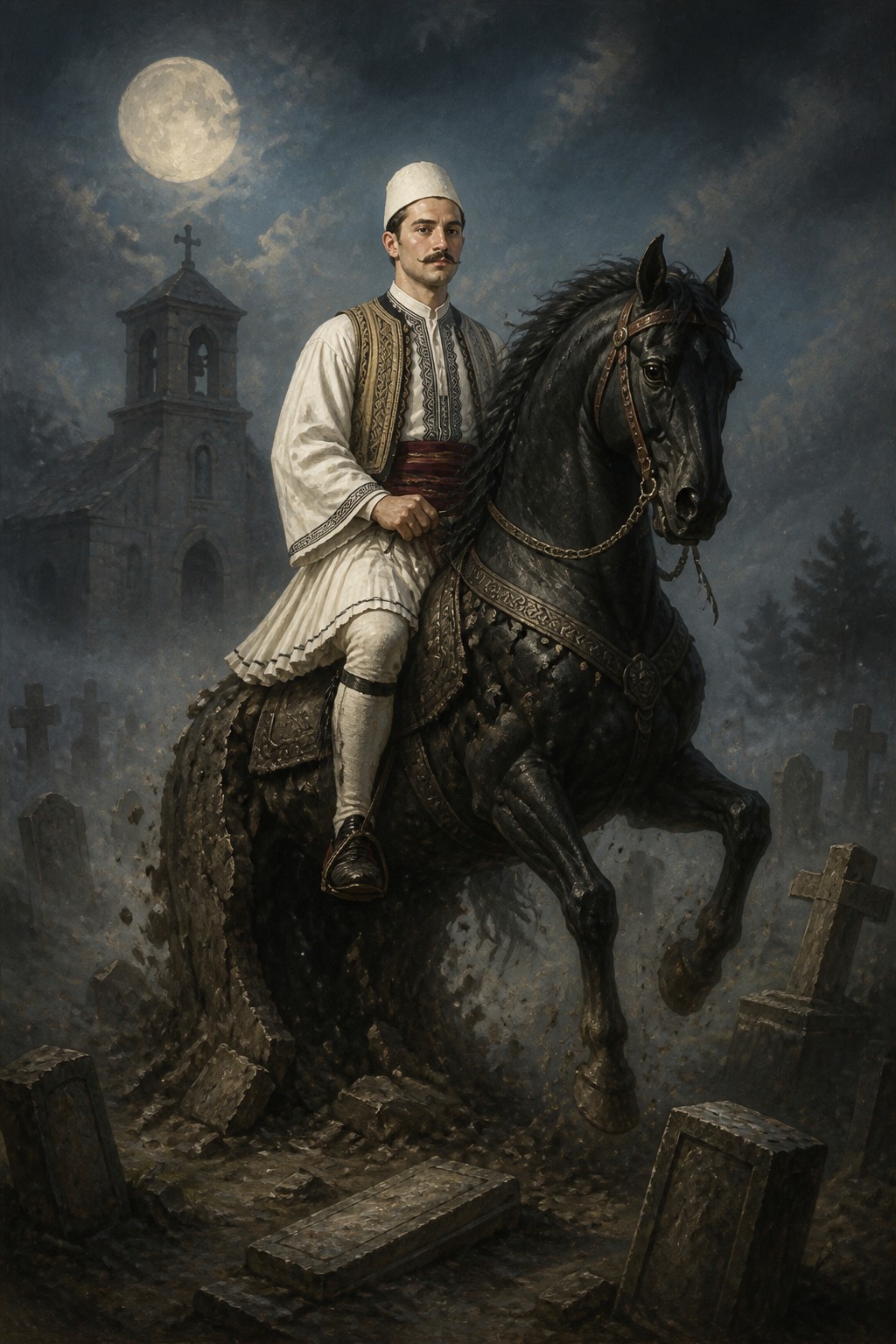
Tombstone stallion
From the grave arose Constantine,
Tombstone turned into a stallion,
Graveyard soil became a saddle,
On his black horse did he clamber,
One by one he crossed the mountains
Swiftly, slowly did he journey,
Passing seven alpine ranges,
Seized his sister from her dancing:
“Oh Dhoqina, poor Dhoqina,
Do you not long for your family?
Tears are flowing down your mother’s
Face who cries to see her daughter.”
“Good or bad news are you bringing?”
“Come along now with me, sister,
As you are, dressed in those garments.”
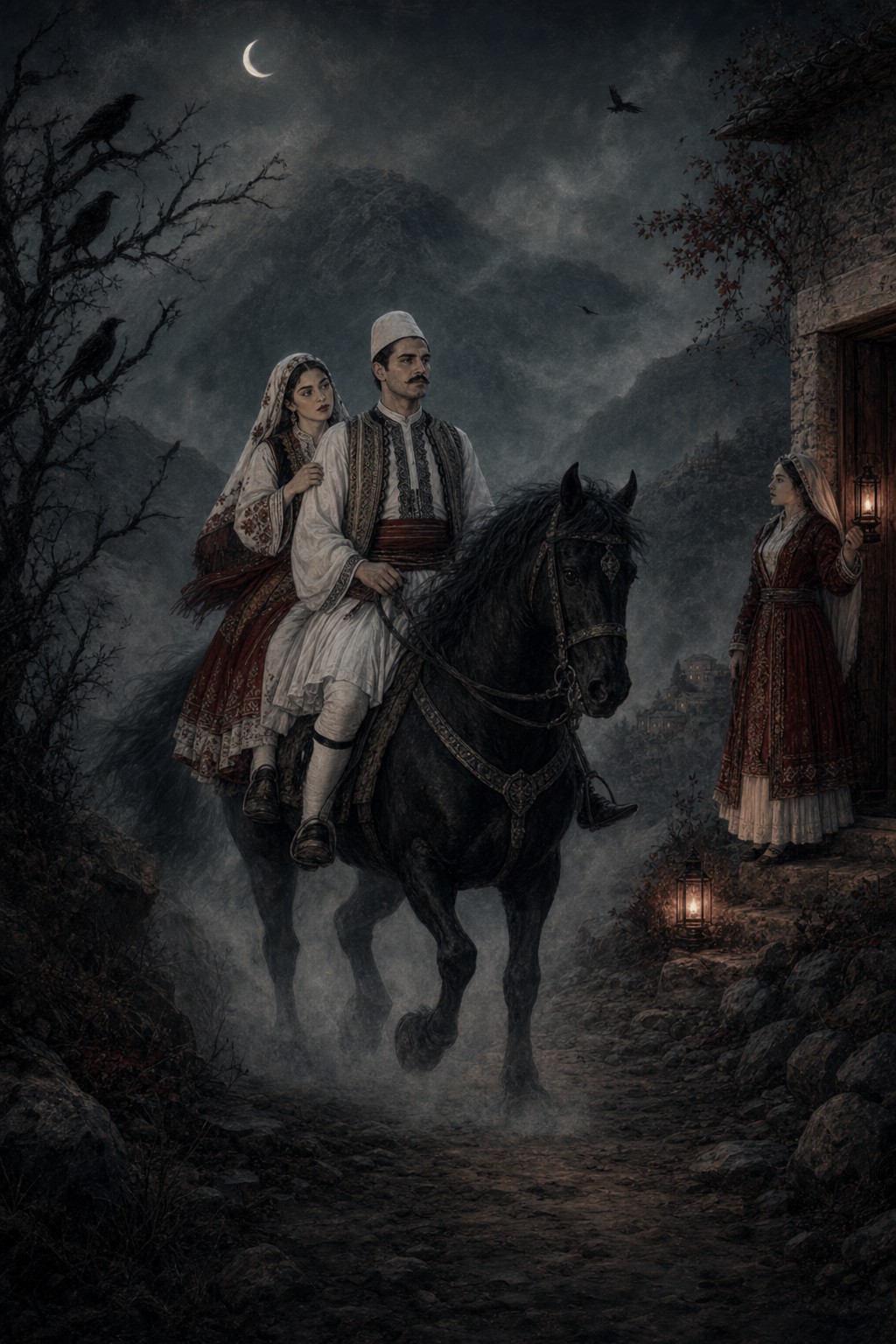
Dead man riding
O’er the horse’s rump he pulled her
As the birds chirped in the mountains:
“Tsili viu, tsili viu,
Have you seen them, have you seen them,
Dead man riding with the living?”
Then Dhoqina asked her brother:
“Constantine, oh dearest brother,
What has happened, what’s the matter?
What’s that heavy smell that’s coming
Off your arms and mighty shoulders?”
“Smoke and powder from my rifle
For I’ve been at war, in battle.”
“Constantine, oh dearest brother,
What is in your hair that’s glaring,
Flaring that it almost blinds me?”
“Do not worry, my good sister,
Just the dust whirled from the highway.”
“Constantine, oh dearest brother,
What’s the matter with our house here,
Why has it been painted over,
Has perchance misfortune struck it?”
“Do not worry, fair Dhoqina,
It’s just mother who’s grown older.
She no longer liked the colours,
Thus she had the house repainted
Black as symbol of her aging,
Nothing more and nothing less,” he
Told her at their destination.
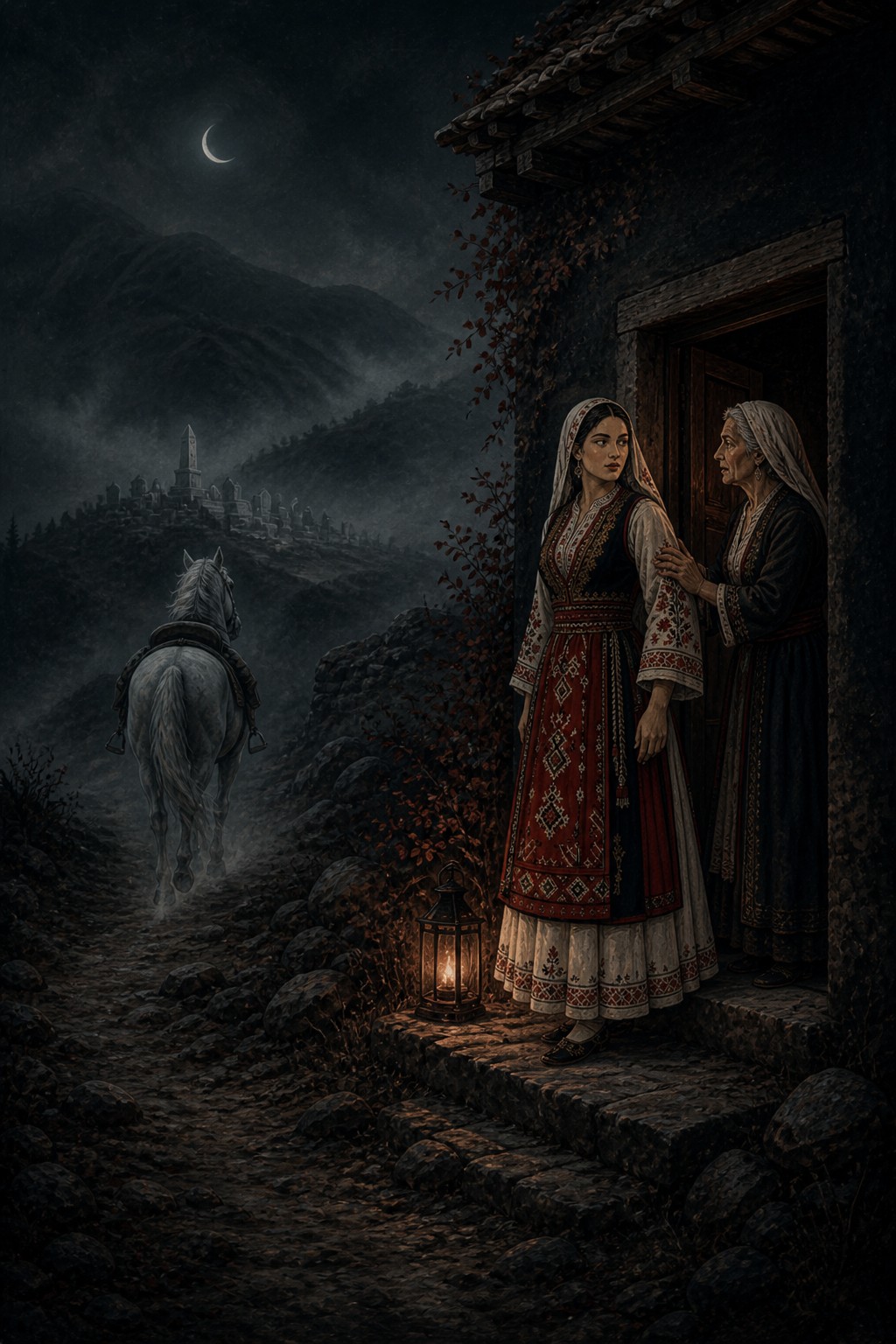
Threshold of recognition
“Off the horse now, fair Dhoqina,
Go into the house, my sister,
I’ll be with you in a twinkling.”
Constantine flew off that instant
And returned unto his graveyard.
To the doorway strode Dhoqina,
“Open, mother, it’s Dhoqina!”
“Who is claiming she’s Dhoqina?
May a bolt of lightning strike you!
Who has led you to my doorway?
All my sons are gone and perished.”
“Open up the door, dear mother,
For I’ve come back with my brother,
Come with Constantine on horseback.”
“Constantine is gone and perished,
Fell upon the field of battle,
Withered, turned to dust his body.”
Then she opened up the door and
Saw her daughter on the threshold,
Both the women died that second.
Colophon
- primaryRobert Elsie (trans.), "The Ballad of Constantine and Dhoqina," Albanian Literature — Oral Verse (albanianliterature.net).
[Kostandini e Dhoqina, recorded in Arpica near Margëlliç (Margariti) in Chameria (northwestern Greece). From: Balada shqiptare, ed. Vladimir Zoto (Tirana: Dasara 2006), p. 57-59. Translated from the Albanian by Robert Elsie.]
Legend text: Elsie translation (online anthology) — non-commercial use with attribution. Do not republish the Dukagjini PDF body.