
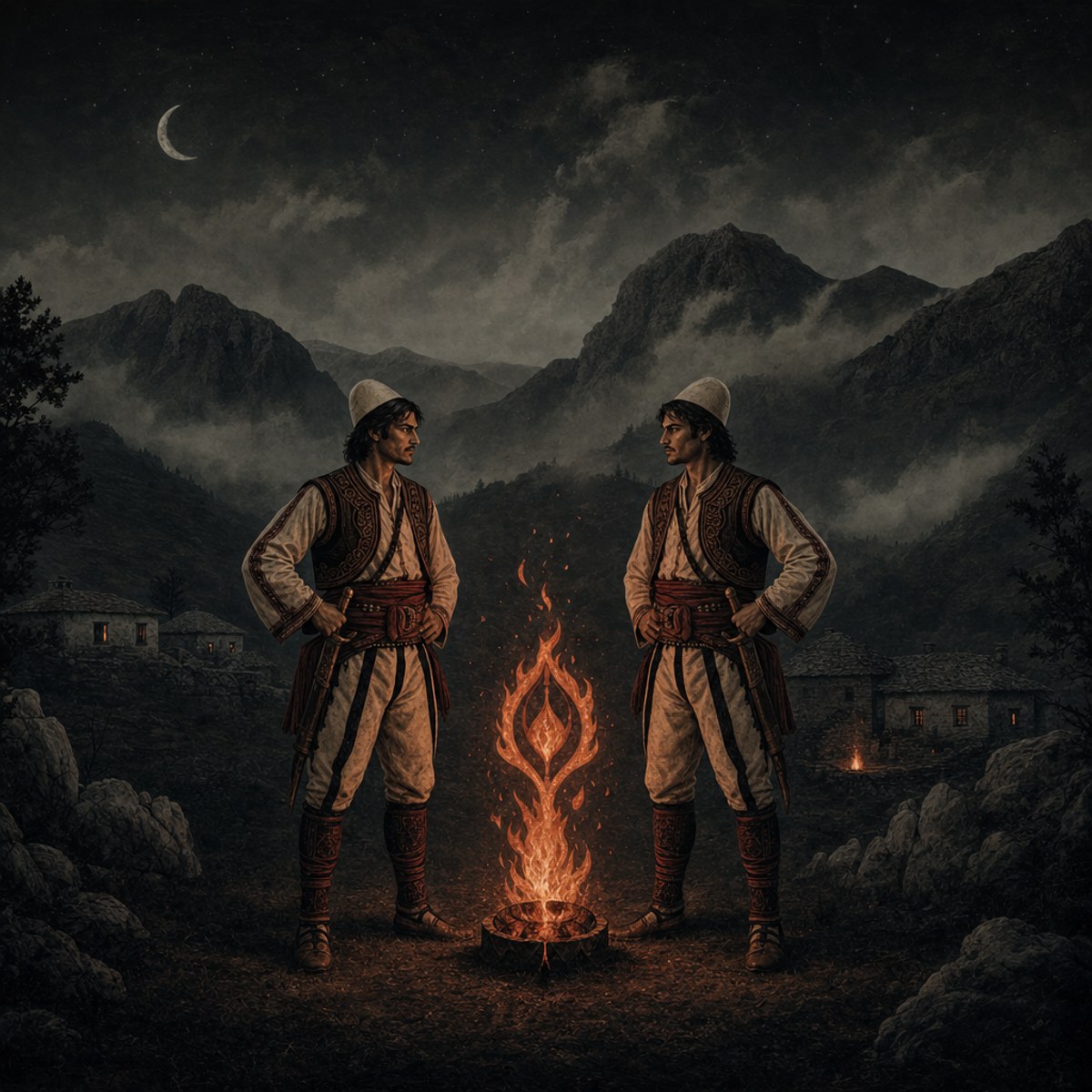
The Twins (Zjermi and Handa)

Zjermi e Handa

Arbëresh wonder-tale twins (Schirò).

Story paths

Description

Wonder-tale heroic cycle of twin culture-heroes Zjermi (“fire”) and Handa (“moon”), born with Sun (Dielli) and Moon (Hëna) forehead marks after a deposed king divides a speaking red fish among wife, self, mare, dog, and garden. Twin foals, twin puppies, and two silver swords appear with them. After the father’s ora-joined death and gift of life-token rings, the brothers part at a flowering almond fork. Best →B creature-quest bridge: ora (deathbed/fate), zana garden (Schirò), shtriga/witch petrifier (Wheeler names her Mamadreqja), kulshedra city-plague, wounded drangue Zef blood-brotherhood (Wheeler), and e Bukura e Dheut in her mountain-cave palace. as pan-highland Kreshnikësh canon or Mujo–Halili continuity. Twin-hero motif parallels epic brother-pairs (Neziri) without identity. Schirò 1923 owns zanas, lily-dew revival, Barkulku, sword-of-chastity bed; Wheeler 1936 owns Zef/drangue thunder + wooden cradles vs kulshedra foam, Mamadreqja naming, and omits zanas and the bed scene.

Motifs

  • red fish conception
  • simultaneous animal birth
  • garden silver swords
  • forehead sun moon
  • ora deathbed
  • life token rings
  • almond fork separation
  • dogs unafraid of drangue

Lead story

[Wonder-tale bridge — Schirò 1923 Arbëresh I Gemelli + Wheeler 1936 strand. Not a Malësia epic song. Render variant_box with this short_story — no silent composite.] A king who has lost his kingdom hoes a garden by the sea. He catches a red fish that speaks. Divide it: head to the wife, middle to himself, tail to mare and dog, bones in the earth. Twin boys are born — Zjermi with the Sun on his forehead, Handa with the Moon. Two foals, two pups, two silver swords rise with them. When the ora has joined their father, he gives each son a gold ring whose gem will blacken in the other’s danger. A year on, the twins gird the swords, take horse and dog, and their mother — spinning. At a flowering almond the road splits. They vow to meet there each year. Zjermi’s horse takes the right path; Handa’s the left. On Wheeler’s road Zjermi finds a wounded drangue — Zef — and they mingle blood. Ahead, a shuttered city: the kulshedra has sealed the river’s source and eats a maiden a day. Princess Bardhakuqja is tied at the abyss. Tear on the sleeper’s face; seven heads rise from boiling water; dog at the hind, horse on the armor, silver sword for the crowned center. In Wheeler, Zef and his kind come in thunder, left hands holding wooden cradles (Wheeler 1936 — against the beast’s foam), and weaken her before the last cut. Tongues and crowned head go in the saddlebag. Barkulku the Wolfbelly brings the empty necks and claims the bride; proof answers him. At the garland the ring goes black. Handa ignores the old man at the stream who says the path is worse than death. In Schirò he walks into the garden of the zanas — white laughter, songs, dances — and they name the cave at the mountain foot where e Bukura e Dheut keeps her court. At the bramble hedge the witch — Mamadreqja in Wheeler; unnamed shtriga-ordeal in Schirò — sets her tests. Handa fails; ointment or enchanted thorn turns boy, horse, and dog to stone among a hundred princes. Zjermi does not linger with the zanas. He binds the witch, learns the cure — lily dew on eyes and lips in Schirò; dragon-tongue against her magic in Wheeler — and wakes his brother. The Beauty under vine and cypress takes Handa. Later the twins reclaim a usurped crown; strength like a drangue is the tale’s own simile. When Zjermi lies too weak to ride home to Bardhakuqja, Handa goes in his place and lays the silver sword between them in the bed — chastity until the true bridegroom laughs at the blade and the fear breaks. That is the bridge: ora at the deathbed, zana garden, shtriga stone, kulshedra drought, drangue blood-oath, Earthly Beauty in the cave — märchen roads, not highland canon.

Aliases

Binjakët · Binoshët · I Gemelli · Zjerma · Zjermi · Handa · The Boy who was Brother to the Drague · Bardhakuqja · Bardha-Kuqe · Barkulku · Zef · Mamadreqja

Region

Primary: Arbëresh Sicily — Piana degli Albanesi (Schirò 1923). English bridge: Wheeler Albanian Wonder Tales (1936). ATU 303 + ATU 300 wonder-tale circuit — not Malësia Kângë Kreshnikësh field canon.

Relations

Linked stories

  • Red-fish twin birth; ora deathbed + life-token rings; almond fork; Handa enters garden of zanas (Schirò); witch petrifies; lily dew / dragon-tongue cure; e Bukura e Dheut cave; kulshedra city-plague; Barkulku; sword of chastity. Wheeler: Zef/drangue + Mamadreqja; omits zanas/bed.

  • A deposed king divides a speaking red fish; twin boys Zjermi (sun brow) and Handa (moon brow) are born with twin foals, pups, and silver swords.

  • When the father’s ora has joined him, he gifts each twin a life-token ring whose gem blackens in the other’s danger — then the brothers part.

  • Handa enters the white garden of the zanas; songs and dances; they name the mountain-foot cave where E Bukura e Dheut keeps court.

  • Under vine and cypress at the cave mouth, E Bukura e Dheut among her maids offers her hand to Handa after the ordeal.

  • A shuttered city: kulshedra seals the river source and eats a maiden a day. Princess Bardhakuqja tied at the abyss; Zjermi (+ Wheeler drangues) slays seven-headed beast; Barkulku impostor exposed.

  • On Wheeler’s road Zjermi finds wounded drangue Zef; they mingle blood. Dogs unafraid of the storm-brother.

  • Witch/petrification gate stands between hero and Earthly Beauty (Twins hedge + Kurti-title adjacency). Path obstacle, not Beauty’s identity.

  • Tirta: sun and moon as husband/wife OR brother/sister — one village keeps one telling. Not both as consorts in the sibling frame. Forehead marks on twins/heroes are related only.

  • Wonder-tale twins echo epic brother-pair theme (Neziri) and ‘strong as dragua’ simile — motif parallel only.