
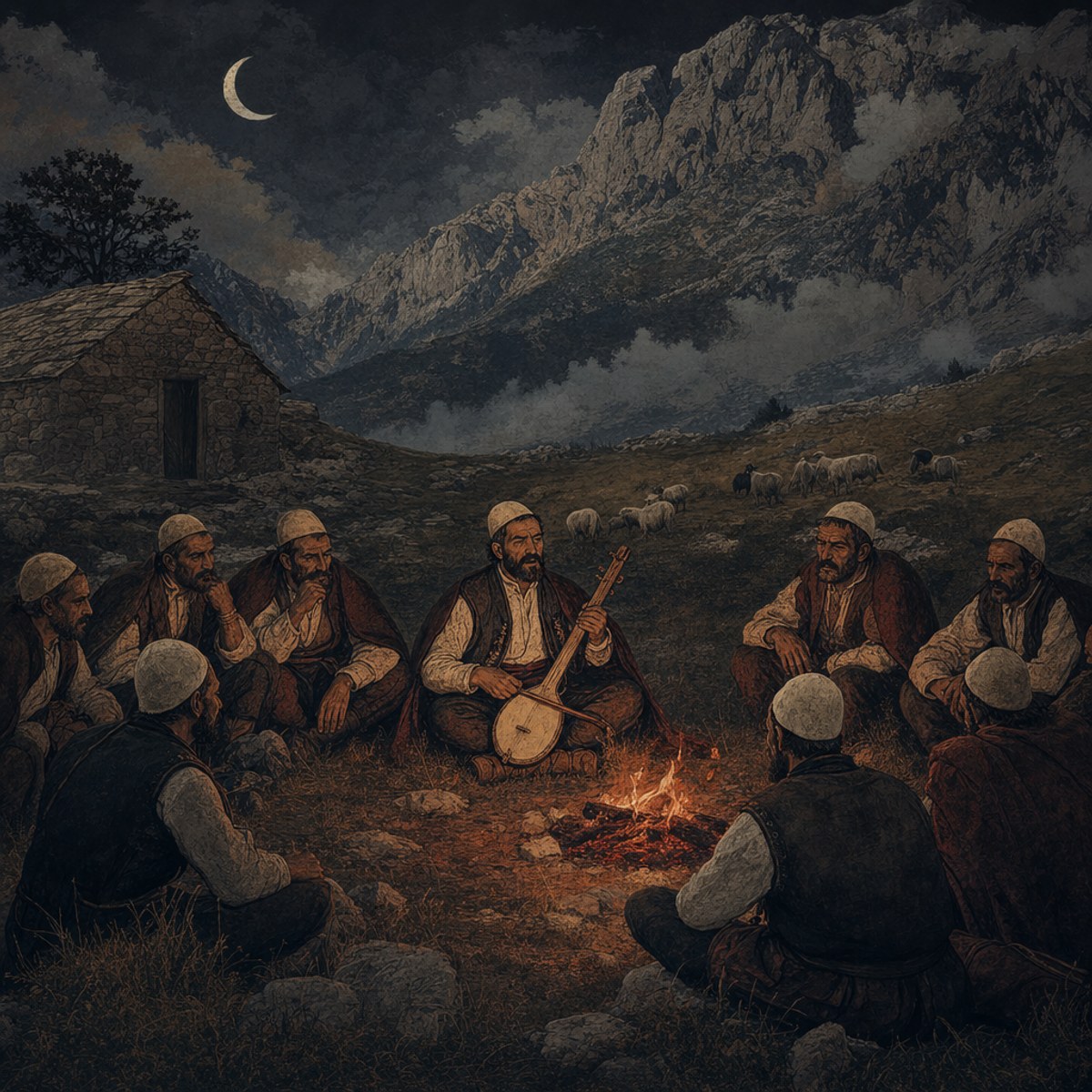
Songs of the Frontier Warriors
Kângë Kreshnikësh
Performance: traditionally sung from memory by lahutarë accompanying themselves on the lahutë (bowed monochord); some singers use çifteli.
Description
Motifs
- oral epic cycle
- lahute performance
- frontier warfare
- kreshnik band
- divine twins muji halili
- kanun honor duel
- besa
- pagan nature matrix
Lead story
Aliases
Këngë Kreshnikësh · Cikli i Kreshnikëve · Eposi i Kreshnikëve · Kënge trimash · Kënge të moçme · Songs of Heroes · Songs of the Frontier Warriors and Legends
Region
Northern Albanian highlands; Kosovo (esp. Rugova); Albanian Montenegro; bilingual Sanjak / Novi Pazar stratum historically. Epic toponyms: Jutbina, New Kotor (Lika–Krbava frontier stratum east of Zadar).
Relations
- Ajkunaof the cycle
- Ali Bajraktariof the cycle
- Baloz (epic sea-risen foe)of the cycle
- Epic fauna (horse, snake, goats, cuckoo)of the cycle
- Gjergj Elez Aliaof the cycle
- Dranguemetaphor link only from muji
- Halilifeatures
- Jutbinasong geography
- Mujifeatures
- Omer, Son of Mujoof the cycle
- Oraof the cycle
- Syqenëz (four-eyed oven hag)linked in story
- The Twins (Zjermi and Handa)motif parallel
- Zana (mountain nymph)of the cycle
- Jevrenija (Kreshnikësh)of the cycle
- Hasapi (Kreshnikësh antagonist)of the cycle
Linked stories
- Fuqija e Mujit / Mujo’s StrengthRecorded
Cowherd rocks zana infants on the bjeshkë, drinks staged milk, lifts the progressive boulder, binds blood-brotherhood, returns to the Plain of Jutbina.
The frontier cycle sings twin heroes Muji and Halili. Zana empower Muji; Ora protect and guide the household against epic foes.
- Orët e Mujit / Mujo’s OrasRecorded
Three snow-white oras revel at a fountain; Paji crushes one arm; the insult binds Mujo; Halili later frees the chain-gang.
Cowherd Muji rocks zana cradles; midnight lights; chooses strength; staged milk nursings; progressive boulder to thousand-oka shoulders; refuse further milk lest world crushed; vëllam.
Bridal escort parks in zana meadow; Mujo holds three golden-horn wild goats hostage to thaw the men and reclaim the bride.
- Marriage of HaliliRecorded
Ora guides Sokol Halili to Tanusha; birds call Mujo’s rescue on the same frontier road.
- Omeri i Mujit — rescue and deathRecorded
Prison-break with Rusha; Mujo’s false-threat test; enemies’ false news of Mujo’s death; mountain burial. Elsie #18–#19 only.
- Gjergj Elez Alia × BalozRecorded
Dying brother rises for one duel vs sea-risen Baloz who claimed his sister; shared grave. Adjacent subcycle, not Muji twin war.
- Ali Bajraktari — besaRecorded
Secondary kreshnik keeps word of honour under pressure in the thirty-aga cosmos; PK marriage song remains a text gap.
Mother blinds son over a captive baloz; oras restore sight. Cluster role under ali_bajraktari.