The Sun
Dielli
Tirta (2004) treats the solar complex as primary among traditional festivities.
Story paths
Description
Signs
Belief-signs this figure carries.
Motifs
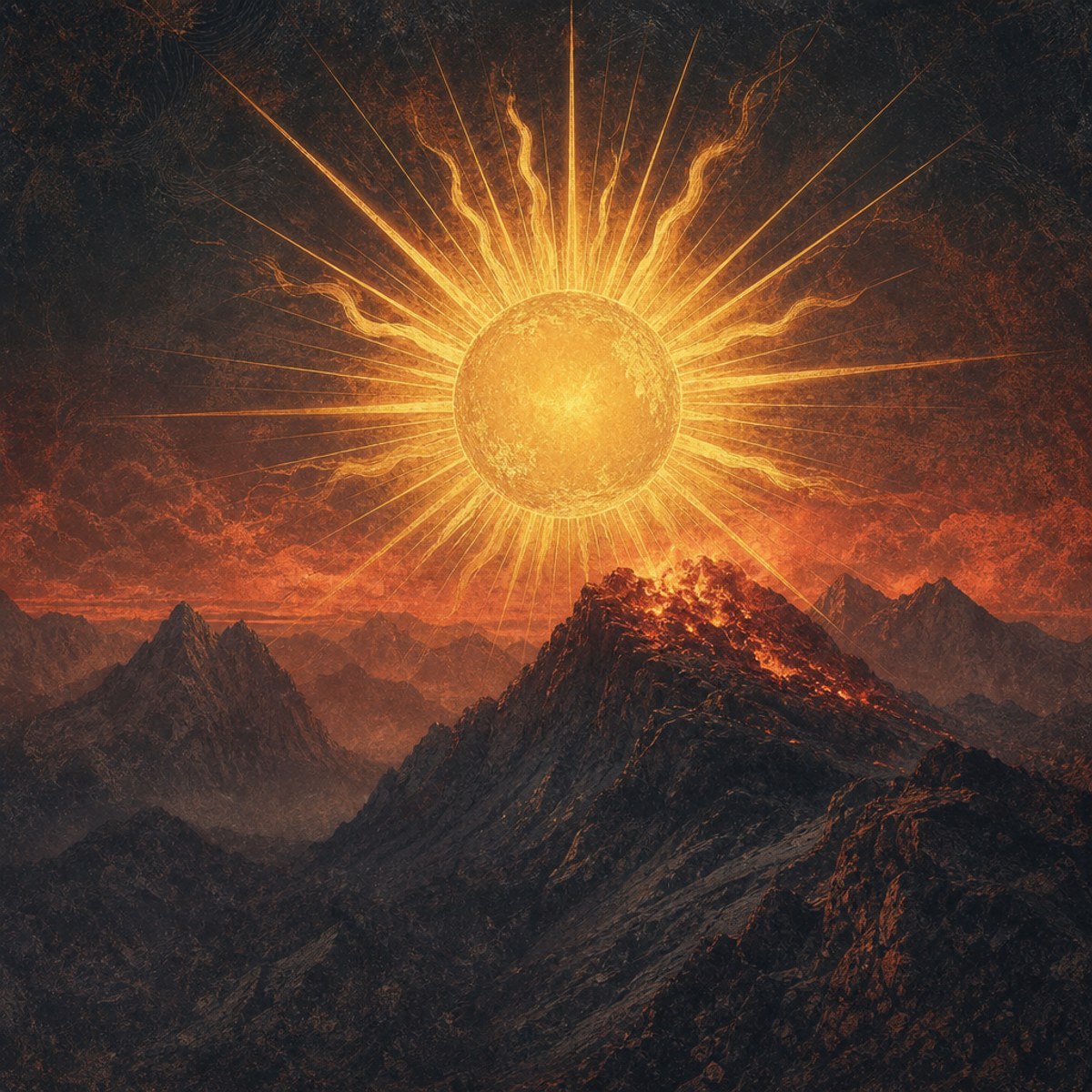
- sun disk
- sun wheel
- all seeing eye
- oath by the sun
- calendar fire strengthens sun
- dita e veres
- vereza spring renewal
- winter solstice buzmi
Lead story
Aliases
Diell · i Bukuri i Qiellit · sy diell · sy i madh · e diel
Region
Pan-Albanian cult and folk art; dense northern highland visual record (tattoos, graves, carvings — Durham; Shala — Galaty et al. 2013). Calendar spine nationwide (Dita e Verës / Verëza; winter-solstice fires; summer mountain/livestock feasts). Earliest written notice: Sebastian Franck 1534 (via Elsie). Illyrian Lake Shkodra plaques = comparative only.
Relations
- The Earth / Lady of the Earthoath context
- Father Tomorrsky triad
- The Moonsky pair
- Prende (dawn / love / Friday)dawn-near
- Vitore (Household Serpent)linked in story
- Zojz (sky / lightning name)sky-father
- Dranguelight and dark
- Beauty of the Sea / Sea Beautynot the same as
- Earthly Beauty / Beauty of the Earthtriad epithet see also
- Enji (Thursday / fire name)strengthens sun
- Kulshedrathreatens
- Mother of the Hearthhearth fire as sun offspring context
- Perëndi (living God-word — essay)called with rain
- Sari Saltik (Krujë / Pashtrik mountain sacral)midsummer rain hopes
- Saint Elias (thunder / rain saint absorber)called with rain
- Saint George (spring calendar saint)spring solar
- Shurdh (northern storm / hail cluster)linked in story
- The Twins (Zjermi and Handa)forehead mark
- Zana (mountain nymph)linked in story
- Old Wife's Days (calendar hinge)seasonal solar adjacency
- Summer Day (spring new-year feast)spring sun
- Buzmi (Yule log / midwinter fire)winter fire strengthens sun
- Mother of the Sunsoft solar field
- Daughter of the Moon and the Sunsun parent field
Linked stories
Caul-born winged highlanders fight the storm-demon with cradle-shields, plow-beams, millstones, lightning; Durham/Elsie thunder-as-battle; N sun/moon seizure apotropaia.
Weekday e premte / e prende; Afërdita morning/evening star; northern Zoja Prenne / Zoja e Bukuris. 26 July: finest clothes, mortar and pestle; rainbow as Lady’s belt. Daughter-of-Zojz = folk + IE dawn pattern, not Olympian genealogy.
A deposed king divides a speaking red fish; twin boys Zjermi (sun brow) and Handa (moon brow) are born with twin foals, pups, and silver swords.
- Elias bolts the storm-dragonRecorded
Folk weather capacity: Shën Ilia (Elias) strikes kulshedras with thunderbolts from hilltop sanctuaries (~20 July feast). Syncretic storm saint — not a reconstructed pagan Ilia god-name, not Zeus clone.
- Dita e Verës spring hingeRecorded
Elsie Summer day: March 14 in Elbasan and central/southern Albania marks end of winter with yard bonfires. calendar feast beside Dielli/Enji fire grammar; peer with Shëngjergji and Buzmi — never swallow.
- Buzmi Yule log hingeRecorded
Elsie Yule log: on Nata e Buzmit the buzmar proclaims the buzm coming with bread. Tirta: table left set for spirits. Dielli/Enji keep solar-fire grammar; this figure owns the log custom. Pair with Dita e Verës.
Tirta: Devoll women bury clay Sun’s Mother doll; share kuleç for livestock luck. Not the cosmogonic daughter tale.
- Prende / Friday — dawn women’s cult (Kosova soft)Reconstructed
Dawn/Friday goddess with northern women’s feast grammar and ShënePremte saint box. Kosova participates via Gheg weekday speech; Not the same as H. ëna.
- Tomor and the sky-father slotReconstructed
Baba Tomor fills a mountain sky-father role in living legend; Zojz is a separate Zadrima god-name residue. Parallel slots — never a merge into Zeus.
- Dheu me barrë — pregnant earth spring taboosReconstructed
Spring soil spoken as pregnant; plough/vegetation taboos in festival window; foundation blood/coin/seed payments; burial coin to pay the Earth. Not the same as E. Bukura e Dheut tale queen.
- Sun–moon material religion + oath spineReconstructed
Highland tattoos/graves/carvings: sun-disk / ray-twigs + crescents (Durham; Shala Galaty). Oaths: për atë diell / sy diell; me hënë; për qiell e dhé. Dielli calendar fires (Buzmi, Verëza) strengthen sun via zjarr grammar. Cult carved grammar, not Olympian biography.
- Dielli–Hëna kinship variantsReconstructed
Tirta: sun and moon as husband/wife OR brother/sister — one village keeps one telling. Not both as consorts in the sibling frame. Forehead marks on twins/heroes are related only.