Mira (fate fairies)
Mira
Tosk “good ones” / soft face of the Fatí triad — not a separate Olympian fate page.
Story paths
Description
Signs
Belief-signs this figure carries.
Motifs
- fate triad te mirat
- third night cradle visit
- beneficent blessings fulfilled
- butterfly riders
- dream intervention
- invoked for aid
- zonja te jashtime epithet
- mire moirai folk etymology
Lead story
Aliases
e mira · të mirat · Mirat · Miren · zonja të jashtime · Jashtësme · të tri gratë
Region
Southern Albania (Tosk); third-night cradle complex shared with Fatí
Relations
- Enji (Thursday / fire name)linked in story
- Fatia (Fate)cradle triad
- Kostandini and Doruntinalinked in story
- Oranot the same as
- Shtriga (vampiric witch)linked in story
- Vitore (Household Serpent)hearth vs cradle
- Mother of the Hearthscholarly link
- Prende (dawn / love / Friday)not the same as
- Shtojzovalle (dance spirits)not the same as
- Zana (mountain nymph)sense-split
Linked stories
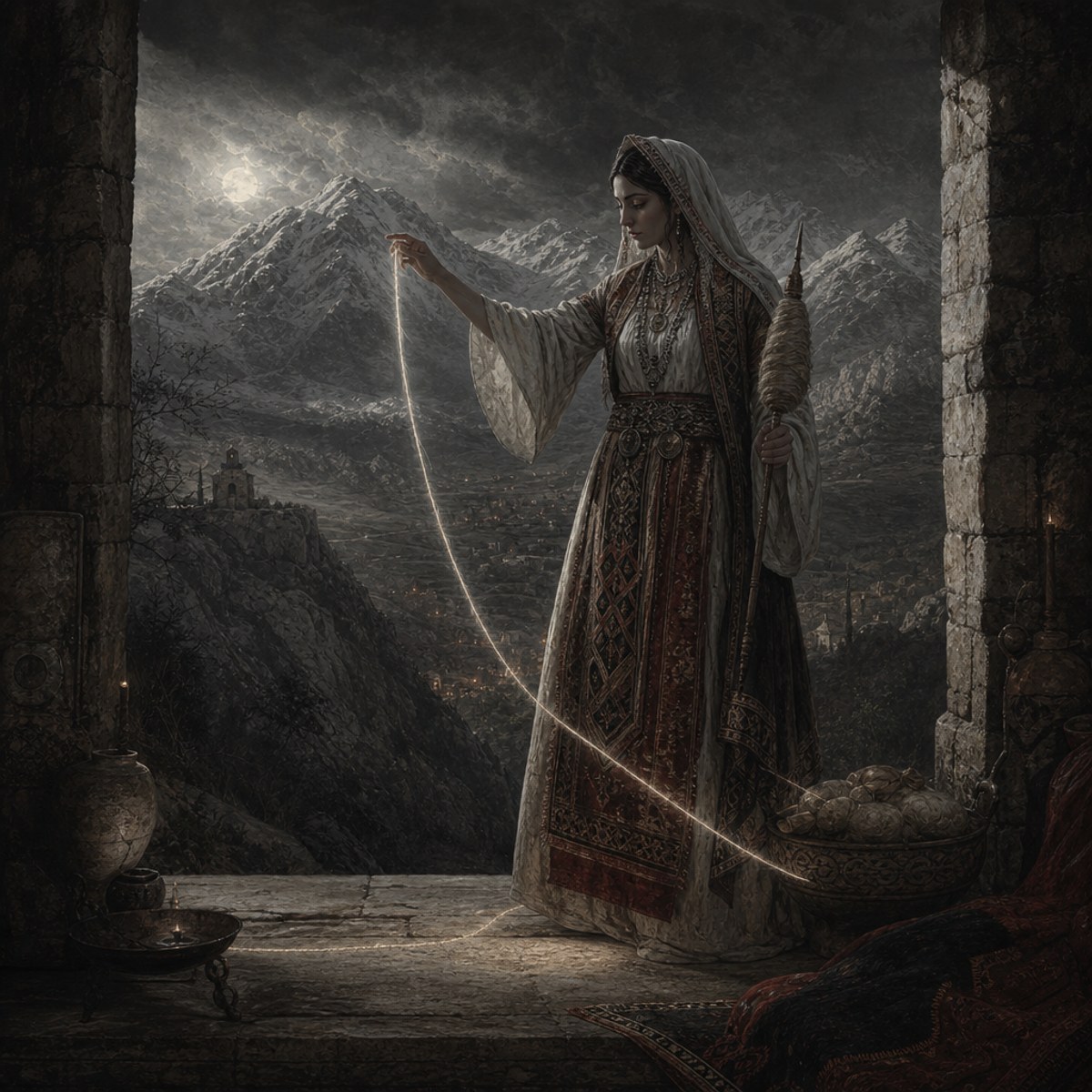
Three invisible old women (Fatite, pl.) on the third night: dogs out, door ajar, honey + three almonds + three breads. They write/bind/cut fate; youngest word may prevail. Tosk–Lab center. Nafaka (Kosova lot lexeme) redirects here — not a second triad. Çam twist sits on Vitore↔Fatí role bridge, not here.
Të mirat ≈ Fatí near-synonym (Tosk fate face); butterfly/dream aid. Elsie zonja të jashtime under Mira = southern fate gloss ONLY. Northern Zónja të Jáshtëme → Zana. të tri gratë → Fatia. ≠ Shtojzovalle.
- Shtojzovalle dance spiritsRecorded
Shtojzovalle are distinct dance-spirits in Elsie’s lexicon. Keep them beside Zana ecology without merging into Mira’s fate triad.
Southern fate-ladies (Fatia / Mira) densify in Lab–Tosk cradle and third-night decree lore. Northern Jashtëme speech is a different sense. Regional color for the cradle complex — not a northern Ora or Zana synonym.
Tirta 2004:115: highlanders avoid saying Zana and use gentler name including Shtojzovallet (Shtoji zot vallet!), Shtojzorreshat, Të Lumet, Nuset e Malit, Fatmirat, Të Mirat, Të Bardhat. Sense-split: Tirta gentler name → Zana; Elsie dance-spirit entry stays on shtojzovalle page. Revel-to-death second page still blocked.
- Arbëresh fate retention vs Zónja–Zana cloudReconstructed
Tosk Fatí/Mira vocabulary may appear in Arbëresh, but Zónja të Jáshtëme often tracks the zana gentler name cloud. Route by sense: cradle-fate → fatia/mira; martial nymph → zana. No local_fatia. High Italian fata contamination risk.
- Nëna e Vatrës — clean ash, food in flameReconstructed
Hearth mother of each house: evening cleaning, feast food cast into fire, old woman spinning/combing by vatër. Night children taboo. Elsie optional ID with three Miras — overlap, not merge. Not the same as B. shtriga.
- Çamëria Vitore = Fatí role (regional bridge)Reconstructed
Pedersen/Doja/Elsie: in Çamëria Vitore plays birth-fate / spinner role. High regional —
- Myzeqe fate/hearth ecology (honest thinness)Reconstructed
Myzeqe lowland houses participate in Tosk Fatí/Mira third-night ecology and Vitore hearth serpent — no independent Myzeqe-only monster atlas or Olympian plain family of gods recorded this sweep. Map as belt ecology, not invent.
- Bardha mist ≠ Ora e Bardha colourEditorial
C bardha mist maidens (honey/cake; tread→mute) are distinct from Dukagjini e Bardha/e Verdha/e Zeza fate allotment on ora.
- N–S fate split: Fatia/Mira vs OraEditorial
Same cradle-fate work: South Fatí/Mira, North Ora (C). Functional homology; never identity merge. Epic serpent-Ora / Mujo stays on C ora.
Labels: (1) Fatia/Fatí/Fatite/të tri gratë — same triad. (2) Nafaka → Fatia. (3) Mira/të mirat — soft fate face. (4) Jashtësme — SENSE-SPLIT (N→Zana; Elsie S→Mira field only). (5) Çam Vitore↔Fatí role bridge. Ora ≈ northern cradle homology.