Mother of the Hearth
Nëna e Vatrës
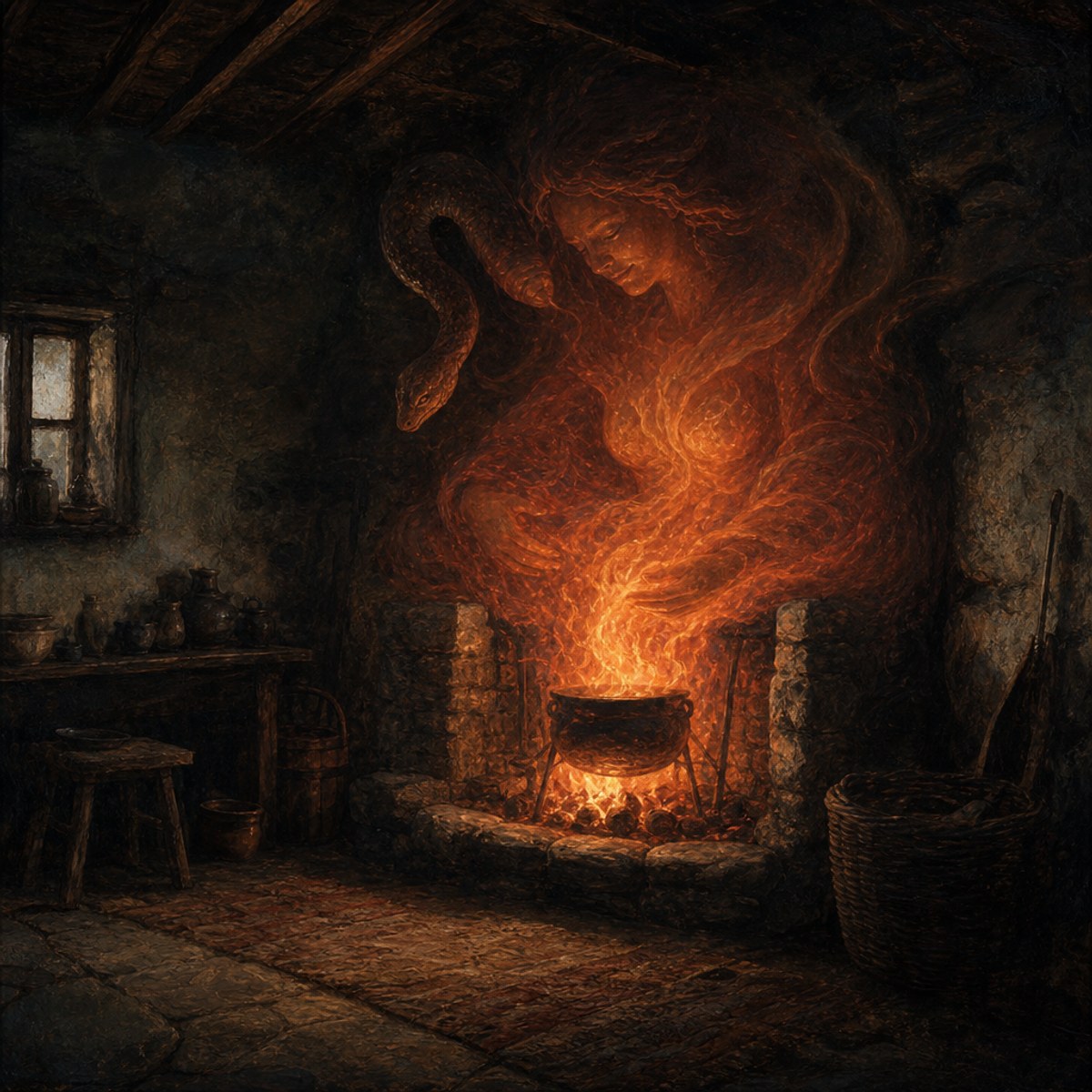
Hearth mother of each house (ash, feast food in flame, spinning by vatër)
Story paths
Description
Signs
Belief-signs this figure carries.
Motifs
- hearth mother
- vater protector
- evening hearth cleaning
- anger if hearth dirty
- food offering into fire
- old woman spinning by fire
- combing grey hair metal comb
- night children hearth taboo
Lead story
Aliases
Nana e Votrës · E Ëma e Vatrës · E Ama e Votrës · Mëma e Vatrës · Mama e Vatrës · Plaka e Vatrës · Plaka e Votrës · Shtriga e Vatrës · Shtriga e Votrës · Mëmat e Vatrës · Mamat e Votrës · Xhuxhet e Vatrës · hyjni e zjarrit të vatrës
Region
Pan-Albanian dialect web (vatër/votër); domestic hearth of every house rather than a public temple. Ethnographic visuals include northern house hearths (e.g. Durham Shkreli 1909).
Relations
- The Earth / Lady of the Earthhearth-near
- Kulshedralinked in story
- Lugat (pest-revenant)linked in story
- Bollalinked in story
- The Sunhearth fire as sun offspring context
- Enji (Thursday / fire name)fire kin
- Fatia (Fate)near
- Mira (fate fairies)scholarly link
- Shtriga (vampiric witch)not the same as
- Vitore (Household Serpent)hearth pair
- Oralinked in story
- Rozafahearth-near
- Syqenëz (four-eyed oven hag)not the same as
- Old Wife's Days (calendar hinge)not the hearth Plaka
- Buzmi (Yule log / midwinter fire)hearth-near
- Bukla (weasel house-totem)not the same as
Linked stories
Benign colourful serpent in wall niche/foundation; hiss announces family events; kill taboo risks line extinction. South name Vitore; north Ora e Shtëpisë / Gjarpni i Vatrës. Kosova Doli carvings. Not the same as Wild. bolla; alias Bolla e Shtëpisë → vitore.
- Ditët e Plakës ≠ Nëna e VatrësRecorded
Elsie Old Wife's Days (Ditët e Plakës) is the last-cold calendar hinge. Nëna e Vatrës owns hearth epithets Plaka/Shtriga e Vatrës. kept separate. Also Not the same as Rollca Plaka. Plaka witch entry.
- Hearth serpent vs cursed bollëReconstructed
The house vitore is a guardian coil by the hearth; the bollë is a cursed field serpent that ripens toward Kulshedra. Folk contrast keeps them from collapsing into one snake.
- Nëna e Vatrës — clean ash, food in flameReconstructed
Hearth mother of each house: evening cleaning, feast food cast into fire, old woman spinning/combing by vatër. Night children taboo. Elsie optional ID with three Miras — overlap, not merge. Not the same as B. shtriga.
- Çamëria Vitore = Fatí role (regional bridge)Reconstructed
Pedersen/Doja/Elsie: in Çamëria Vitore plays birth-fate / spinner role. High regional —
- Enji Thursday residue / Zjarri ritual centerReconstructed
E enjte calques Iovis dies; no continuous folk saga naming Enji. Living ethnography is zjarr/vatër — calendar fires, storm brands, hearth continuity. Not a Zeus/Jupiter/Agni clone; Treimer’s “ousted sky father” reading stays speculative.